NRI Guide: How to Buy Plots in Dholera Smart City from Abroad 2026
Home / Dholera SMART CITY PROJECTS NRI Guide: How to Buy Plots in Dholera Smart City from Abroad — 2026 In the last 18 months, a noticeable shift has happened in the Dholera investor profile. The buyers visiting our platform from Canada, the UK, Australia, the UAE, and the United States have increased significantly. Some are returning to their roots — Gujarat-origin NRIs who want to invest in the state their families are from. Others are purely financial investors who have identified Dholera as one of the few remaining early-stage smart city plays in Asia with genuine government backing and an infrastructure calendar they can track in real time. What many of them share is the same initial hesitation: the process of buying property in India from abroad feels complicated. It involves FEMA, NRE accounts, Power of Attorney, and a lot of paperwork in a country where they are not physically present. This guide demystifies the entire process. By the end of it, you will know exactly what you are eligible to buy, how to pay, which documents to prepare, how the registration works remotely, and what tax obligations to expect when you eventually sell. Are NRIs Eligible to Buy Plots in Dholera? The Legal Answer Yes — clearly and unambiguously. Non-Resident Indians (NRIs) and Persons of Indian Origin (PIOs) are fully eligible to purchase residential and commercial plots in Dholera SIR. This is governed by: Foreign Exchange Management Act (FEMA), 1999 — specifically the FEMA (Acquisition and Transfer of Immovable Property in India) Regulations Reserve Bank of India (RBI) Regulations — which allow NRIs to acquire immovable property in India without any prior permission from the RBI, as long as the payment is made through specified channels What NRIs Can and Cannot Buy Can buy: Residential plots and apartments Commercial plots and office units SCO (Shop-cum-Office) units Industrial plots (in designated zones) Cannot buy: Agricultural land Plantation property Farmhouses All RERA-registered plots in Dholera SIR’s Activation Area and TP zones are classified as residential or commercial — fully eligible for NRI purchase. Why Dholera Is Attracting NRI Investors in 2026 Before getting into the process, it is worth understanding what is driving this interest — because the fundamentals have materially changed in the last 24 months. The Semiconductor Play Tata Electronics’ confirmed semiconductor fabrication plant in Dholera is not just a factory. It is the anchor around which an entire electronics manufacturing ecosystem will develop. When TSMC announced its Arizona plant, land prices in that corridor moved dramatically. Dholera’s semiconductor story is at an earlier stage — meaning the price movement is still ahead. Airport Connectivity Changes Everything for NRIs For NRIs specifically, the Dholera International Airport changes the investment calculus. Once operational, it means you can fly directly into Dholera’s corridor from international connections through Ahmedabad — rather than making the 100 km drive from Ahmedabad airport every time you want to visit your plot. Accessibility to an asset matters for how you manage and eventually sell it. Price Versus Other Indian Metros An NRI who has watched Mumbai, Bangalore, or Gurugram property prices become unaffordable finds in Dholera an entry point that still makes sense. Activation Area residential plots starting at ₹6–8 Lakhs, with a credible 3–5x appreciation argument over 8–10 years, is a risk-reward profile that is genuinely rare in Indian real estate today. 👉 See current prices: Dholera Plot Price Per Sq Yard — Zone-Wise Guide 2026 Step-by-Step: How NRIs Buy Dholera Plots from Abroad Step 1 — Shortlist Your Project Begin with the RERA portal. Every project you consider must have a valid RERA registration on gujrera.gujarat.gov.in. Our platform lists only RERA-verified projects, so you can use our directory as a starting point. Consider three variables at the shortlisting stage: Zone: Activation Area is highest value and most liquid. TP-2 and TP-3 are cheaper but require longer holding. Developer track record: Look at how many projects the developer has delivered, not just registered. RERA portal shows their history. Plot size vs. your budget: A smaller plot in the Activation Area will typically outperform a larger plot in an outer zone over a 5–7 year horizon. 👉 Browse: All RERA-Approved Projects in Dholera Step 2 — Request a Virtual Site Tour and Documentation Package A reputable Dholera developer or channel partner will provide: A recorded or live virtual site tour (Google Maps, drone footage, or video walkthrough) The complete RERA registration certificate Approved layout plan showing your specific plot Title document summary Draft Sale Agreement Do not shortcut this step. Review all four documents before committing to a booking amount. Step 3 — Open or Designate an NRE/NRO Account All property payments in India by NRIs must be made through one of the following: NRE Account (Non-Resident External): Funds held in INR, freely repatriable. Tax-free interest in India. Most suitable for NRIs who want easy repatriation later. NRO Account (Non-Resident Ordinary): Rupee account for income earned in India. Repatriation allowed up to USD 1 million per year with CA certification. FCNR Account (Foreign Currency Non-Resident): Held in foreign currency (USD, GBP, EUR, etc.). Fully repatriable. You cannot pay for Indian property from a foreign bank account directly to a developer’s Indian account — this violates FEMA. Payments must flow through your Indian NRE/NRO/FCNR account. If you do not already have an NRI account with an Indian bank, open one with SBI, HDFC, ICICI, or Axis Bank — all offer online NRI account opening with video KYC from abroad. Step 4 — Pay the Booking Amount Once you have decided on your project and verified RERA, pay the booking amount — typically 10–20% of the total plot value. Confirm the following before transferring: Payment must go into the developer’s RERA-designated escrow account — not a general company account Get a payment receipt with the plot number and RERA registration number mentioned on it Booking should be confirmed with a written allotment letter on developer letterhead Step 5 — Execute the Sale Agreement The Sale Agreement
How to Check RERA Registration for Dholera Plots — Step-by-Step Guide 2026
Home / Dholera SMART CITY PROJECTS How to Check RERA Registration for Dholera Plots — Step-by-Step Guide 2026 There is one question that every serious Dholera investor must ask before paying a single rupee — is this project RERA registered? It sounds simple. And in practice, verifying RERA registration takes less than five minutes online. Yet a significant number of buyers skip this step, either because they trust the developer’s word or because they do not know exactly where to check. Some end up discovering months later that the project they booked was either unregistered or had a lapsed RERA certificate. This guide walks you through the exact process of verifying RERA registration for any Dholera Smart City plot — step by step, with screenshots guidance, and a complete checklist of what to look for once you are inside the portal. The Ahmedabad–Dholera Expressway is operational. The international airport is under advanced construction. Tata Electronics has confirmed India’s first semiconductor fabrication plant in Dholera. The question most serious investors are now asking is not whether to buy — it is where to buy, and at what price. This guide gives you a zone-wise breakdown of current plot prices in Dholera SIR, explains what drives the price difference between zones, and tells you which areas still offer genuine early-mover value in 2026. Why RERA Registration Matters More in Dholera Than Anywhere Else Dholera SIR is an emerging market. That is precisely what makes it attractive — and precisely what makes due diligence non-negotiable. Because the city is still being built, not every developer operating in Dholera is a seasoned, compliant entity. Some smaller operators launch projects in outer TP zones under the guise of “smart city adjacent” branding without obtaining RERA registration. Others obtain registration and let it lapse. A few register under one project name and market under another. The Real Estate (Regulation and Development) Act, 2016 — commonly called RERA — was designed exactly to address these situations. Under RERA: Developers must register every residential project above 500 sq meters or 8 units with the state RERA authority before accepting any booking or advance payment A minimum of 70% of buyer funds must be held in a dedicated escrow account and used only for that project Developers are legally bound to the project timeline and specifications declared in the RERA filing Buyers are entitled to interest compensation for every day of delay beyond the declared possession date Full project details — including land title, approved plans, and developer financials — must be disclosed publicly on the RERA portal For a buyer in Dholera, RERA registration is not a formality. It is the difference between a protected investment and an unprotected one. Step-by-Step: How to Check RERA Registration for Dholera Plots Step 1 — Visit the Official Gujarat RERA Portal Open your browser and go to: gujrera.gujarat.gov.in This is the only official portal for Gujarat RERA registrations. Do not use third-party aggregator sites for verification — always check the source directly. On the homepage, look for the “Search Project” option in the main navigation or quick links section. Step 2 — Enter the Project or Developer Name Click on “Search Project” and you will see a search form with multiple fields: Project Name — Enter the name of the Dholera project (e.g., “Dholera Forest Estate” or “Cube Nest”) Promoter Name — Enter the developer’s company name (e.g., “SmartHomes Infrastructure” or “Cube Infra”) District — Select Ahmedabad (Dholera SIR falls under Ahmedabad district in Gujarat RERA) Taluka — Select Dholera if available, or leave blank for a broader search RERA Registration Number — If you have been given a registration number by the developer, enter it directly here for the fastest result Click Search. Step 3 — Verify the Project Status The search results will show all matching projects. Click on the specific project to open its full detail page. Here is exactly what you need to check: Registration Status: Should show “Registered” or “Ongoing”. If it shows “Expired”, “Revoked”, or “Lapsed”, do not proceed with the booking. Registration Number: Note this down. A valid Gujarat RERA number follows the format: GJ/PJT/XXXXXXX/YYYYYYY. The developer should be displaying this number on all marketing materials, brochures, and their website. If they are not, that is a red flag. Registration Validity Date: Check when the RERA certificate expires. Some projects have near-expiry dates. An expiry does not automatically mean the project is bad, but you should ask the developer why they have not applied for renewal. Project Location: Confirm that the address in the RERA filing matches what the developer has told you. Specifically verify the TP scheme number and sub-sector — this tells you exactly which zone the project is in. Step 4 — Review the Project Documents This is the step most buyers skip — and it is arguably the most valuable. On the RERA project page, you will find a documents section with legally filed disclosures. Look for: Approved Layout Plan: This shows the exact plot locations, dimensions, road widths, and common area allocations. Compare this against any site map the developer has shared with you. Land Title Document: Confirms that the developer holds legal title or development rights to the land. Look for a clear title — no disputes, no encumbrances. Commencement Certificate: Issued by the local authority confirming the developer has permission to begin construction or development. For plotted townships this is the layout approval. Quarterly Progress Reports: Developers are required to file updates on the construction/development status every quarter. If the last update was filed more than 6 months ago, ask why. Financial Disclosure: Details of the project’s escrow account. Confirms that buyer funds are being handled as per RERA requirements. Step 5 — Cross-Check the Developer’s Other Registrations Once you have verified the specific project, take 2 extra minutes to search for the developer/promoter name and see all their registered projects. This tells you: How many projects they have delivered or are delivering Whether any of
Dholera Plot Price Per Sq Yard 2026 — Complete Zone-Wise Guide
Home / Dholera SMART CITY PROJECTS Dholera Plot Price Per Sq Yard 2026 — Complete Zone-Wise Guide If you have been tracking Dholera Smart City for any amount of time, you already know that land prices here do not behave like a typical real estate market. They move in step with infrastructure milestones — and in 2026, those milestones are arriving fast. The Ahmedabad–Dholera Expressway is operational. The international airport is under advanced construction. Tata Electronics has confirmed India’s first semiconductor fabrication plant in Dholera. The question most serious investors are now asking is not whether to buy — it is where to buy, and at what price. This guide gives you a zone-wise breakdown of current plot prices in Dholera SIR, explains what drives the price difference between zones, and tells you which areas still offer genuine early-mover value in 2026. What Is Dholera SIR and Why Do Zones Matter? Dholera Special Investment Region is a 920 sq km planned smart city located approximately 100 km southwest of Ahmedabad in Gujarat. It is the flagship project of the Delhi–Mumbai Industrial Corridor (DMIC) and is being developed in phases across multiple Town Planning (TP) schemes. Understanding zones is critical because a plot in the Activation Area can be 3 to 5 times more expensive than a plot in the outer TP zones — and for very good reasons. Proximity to trunk infrastructure, connectivity to the expressway, and readiness for immediate development all vary dramatically from one zone to another. Here is how the Dholera SIR development zones are structured: The Activation Area — The Core of Dholera Smart City The Activation Area is the first 22.5 sq km zone where Dholera’s full smart infrastructure is being deployed first. Underground utilities, ICT backbone, smart roads, sewage treatment, water supply, and street lighting are either complete or under final installation in this zone. This is where the most serious developers — SmartHomes Infrastructure, GAP Group, Epsilon Infraprojects, Cube Infra — have launched their RERA-registered projects. Current price range in the Activation Area: Residential Plots: ₹3,500 – ₹6,500 per sq yard Commercial / SCO Plots: ₹8,000 – ₹18,000 per sq yard Entry-level residential projects: Starting ₹6–8 Lakhs for smaller plot sizes TP-2 Zone — The High-Growth Corridor TP-2 is the second most developed planning zone in Dholera SIR, located adjacent to the Activation Area and along the internal road network that connects to the expressway. Infrastructure development in TP-2 is progressing steadily with road widening, utility laying, and GIDC-supervised plot demarcation already underway. Several plotted township projects with RERA approvals are available here. Current price range in TP-2: Residential Plots: ₹1,800 – ₹3,200 per sq yard Township Projects: Starting ₹4–5 Lakhs for 100–150 sq yard plots TP-3 and Outer Zones — Long-Term Appreciation Play The outer TP zones — TP-3, TP-4, and beyond — represent the long-term land bank of Dholera SIR. Infrastructure timelines here are 5–10 years out. These zones appeal to patient capital: investors who are comfortable holding for 8–12 years in exchange for maximum appreciation potential. Current price range in outer zones: Raw / Semi-Developed Land: ₹400 – ₹900 per sq yard Private Developer Projects in TP-3: Starting ₹1.5 – ₹2.5 Lakhs Important Note: The price difference between zones is not just about distance. It is about infrastructure readiness, legal clarity, and RERA registration. Always verify that any plot purchase — regardless of zone — is registered under Gujarat RERA before paying any amount. Zone-Wise Price Comparison Table — Dholera SIR 2026 Zone Type Price Per Sq Yard RERA Available Infrastructure Status Activation Area Residential ₹3,500 – ₹6,500 Yes Near-complete Activation Area Commercial/SCO ₹8,000 – ₹18,000 Yes Near-complete TP-2 Residential ₹1,800 – ₹3,200 Yes In progress TP-2 Township ₹1,200 – ₹2,000 Yes In progress TP-3 Residential ₹800 – ₹1,500 Limited Early stage Outer Zones Raw/Semi-dev ₹400 – ₹900 Rare Pre-development Prices are indicative as of May 2026 and vary by developer, plot size, corner/non-corner location, and specific sub-sector within each zone. Contact our team for current pricing on specific projects. What Has Driven Price Appreciation in Dholera So Far? To understand where prices are going, it helps to understand where they have come from. 2014–2018: The Awareness Phase When Dholera SIR was first announced as a DMIC flagship project, early investors bought land at prices ranging from ₹200 to ₹600 per sq yard. These were primarily Gujarat-based developers and local agricultural landowners who sold at significant premiums to developer companies who then sought RERA approval and launched plotted projects. 2018–2022: Infrastructure Confirmation Phase The announcement of the Ahmedabad–Dholera Expressway and the commencement of trunk infrastructure work in the Activation Area triggered the first major repricing. Residential plot prices in the Activation Area moved from ₹1,200 to ₹2,800 per sq yard during this period. 2022–2026: The Institutional Entry Phase Tata Electronics’ confirmation of the semiconductor plant, followed by multiple ancillary industry announcements, fundamentally changed the demand profile for Dholera land. Corporate HNIs, NRI investors, and institutional buyers entered the market. Activation Area residential prices moved from ₹2,800 to the current ₹3,500 – ₹6,500 range. Which Zone Should You Invest In Right Now? This is the question every investor asks, and the honest answer depends on three variables: your budget, your holding horizon, and your risk tolerance. If your budget is ₹6 Lakhs – ₹15 Lakhs The Activation Area is accessible at this budget through plotted township projects by RERA-registered developers. You get the best location, the strongest appreciation trajectory, and the highest liquidity when you eventually sell. Projects like Cube Nest 63, GAP Akhilam, and SmartHomes’ Airport City series fall within this range. 👉 Explore RERA-Approved Residential Projects in Dholera for current options in this budget. If your budget is ₹15 Lakhs – ₹40 Lakhs At this budget you can consider larger plots in the Activation Area, commercial plots near the airport corridor, or SCO (Shop-cum-Office) units that offer both capital appreciation and potential rental income once the commercial ecosystem develops. 👉 See Commercial Plots in Dholera SIR for SCO
Is Dholera Smart City a Safe Investment for First-Time Buyers in 2026?
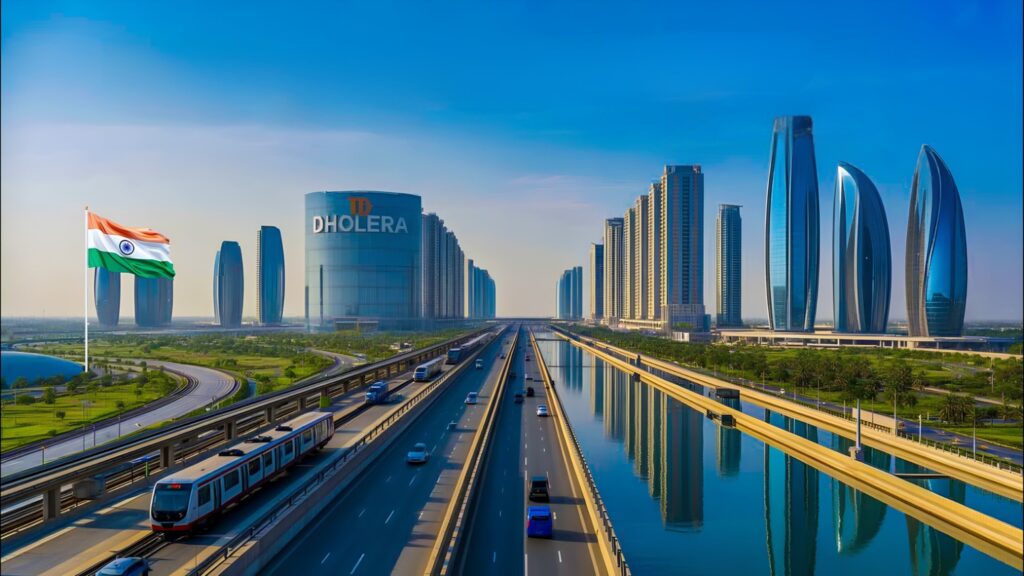
Home / Dholera SMART CITY PROJECTS Is Dholera Smart City a Safe Investment for First-Time Buyers? If you’ve been researching real estate investment in India over the past few years, the name Dholera Smart City has likely come up more than once. Positioned as India’s first greenfield smart city under the Delhi-Mumbai Industrial Corridor (DMIC) project, Dholera promises futuristic infrastructure, massive government backing, and potentially high returns. But for first-time buyers, the big question isn’t just about returns — it’s about safety. Is your hard-earned money actually protected here? Is the project real, or is this another land-banking trap? This guide answers those questions in depth — without the sales pitch. What Is Dholera Smart City? Dholera Special Investment Region (SIR) is a planned industrial and residential smart city located approximately 100 km southwest of Ahmedabad, in Gujarat. Spread across roughly 920 sq km, it is being developed by the Dholera Industrial City Development Limited (DICDL) — a joint venture between the Government of India and the Government of Gujarat. The project is part of the larger Delhi-Mumbai Industrial Corridor (DMIC), which aims to develop a high-speed freight and industrial corridor between Delhi and Mumbai. Dholera sits in a prime location on this corridor, with access to the Dholera International Airport (currently under construction), a six-lane expressway connecting it to Ahmedabad, and planned metro rail connectivity. Unlike private township projects, Dholera SIR is a government-backed initiative — which is one of the key reasons it has attracted significant investor attention. Why First-Time Buyers Are Interested in Dholera The appeal is understandable. Plots in Dholera SIR are currently available at comparatively lower price points than established cities, which makes entry accessible for first-time investors. The promise of long-term capital appreciation — backed by government investment — makes it feel like a low-risk, high-reward play. Here’s what’s drawing buyers in: Government-led development with transparent master planning RERA-approved plots through authorised developers Affordable entry prices compared to Ahmedabad or Surat Upcoming airport, expressway, and metro connectivity Industrial zone allocation attracting global manufacturing companies Clean energy plans including India’s largest solar power park in the vicinity For a first-time buyer with limited capital and long investment horizon (5–10 years), Dholera checks several boxes. Is Dholera Smart City RERA Approved? This is the most important question for any property buyer in India, and the answer is nuanced. Dholera SIR itself — the government-led land development — operates under its own regulatory framework through the Gujarat government. However, private developers selling plots within or near Dholera SIR are required to be registered under the Real Estate (Regulation and Development) Act, 2016 (RERA). Before buying any plot in or around Dholera, you must: Verify whether the specific developer and project is registered on the Gujarat RERA portal (gujrera.gujarat.gov.in) Cross-check the project completion timeline declared in the RERA filing Confirm the plot falls within the approved layout plan of Dholera SIR A legitimate developer will have no hesitation sharing their RERA registration number. If a seller pushes back on this, treat it as a red flag. Is It Safe? — An Honest Risk Assessment Let’s break this down fairly. Dholera is not without risk — especially for first-time buyers who may not be familiar with greenfield real estate investing. Risks to Be Aware Of 1. Long Gestation Period Dholera is a long-term play. Unlike buying a flat in an under-construction project with a 2–3 year possession timeline, plots in Dholera SIR are speculative in nature. The city is still being built. Infrastructure milestones have faced delays. If you need returns in 2–3 years, this is not the right investment. 2. Unregulated Brokers and Middlemen This is the most serious risk for first-time buyers. Dholera’s hype has attracted a large number of unverified brokers who sell plots in areas that are near Dholera but not within the notified SIR boundary. Always demand the actual plot coordinates, survey numbers, and RERA documentation before paying any token amount. 3. Liquidity Challenges Selling a plot in a greenfield city is harder than selling property in a developed locality. There may not be an active resale market for several years. Do not invest money you might need urgently. 4. Infrastructure Timelines May Shift Government projects in India, while generally credible, are not immune to delays. Dholera Airport and metro connectivity timelines have been revised multiple times. Factor in realistic delays when planning your investment horizon. What Makes It Relatively Safe 1. Government Ownership and Oversight The land within Dholera SIR is owned and developed by DICDL — a government entity. This significantly reduces the risk of a developer defaulting or disappearing. The project cannot be abandoned without political and legal consequences. 2. Transparent Master Plan Dholera has a published, publicly accessible master plan that divides the city into residential, commercial, industrial, and green zones. You can verify where any plot sits within this plan — which is something rarely available with private developments. 3. Active Infrastructure Construction As of 2024–2025, several key infrastructure projects are visibly progressing: the Ahmedabad-Dholera Expressway is largely complete, the airport is under construction, and the activation area (the first phase of habitation) has received power and water connections. 4. Global Corporate Interest Several large companies have signed MoUs to set up manufacturing units within the Dholera SIR industrial zone. This commercial interest is a strong signal that the project has credibility beyond just investor speculation. What Returns Can First-Time Buyers Realistically Expect? This is where honest advice matters more than marketing material. Projects inside Dholera SIR Activation Area have seen appreciation of 40–80% over a 4–5 year period in some localities, according to market observers. However, land prices in less-developed zones have remained stagnant or moved slowly. Realistic projections for a 7–10 year horizon: Well-located plots within the notified SIR boundary near activation zones: 3x–5x potential (not guaranteed) Plots outside the SIR or in peripheral zones sold by unverified sellers: High risk, unpredictable returns If you invest ₹5–10 lakhs today in a RERA-verified plot within the right
Why Dholera Smart City Investment in 2026 Is India’s Most Compelling Land Opportunity
Home / Dholera SMART CITY PROJECTS Why Dholera Smart City Investment in 2026 Is India’s Most Compelling Land Opportunity India has produced many real estate promises over the past two decades. Most have delivered ordinary returns at best, and painful lessons at worst. Dholera Smart City is different — not because of marketing language, but because of what is physically happening on the ground in 2026. If you are seriously researching a Dholera Smart City investment this year, this guide will give you the honest, unfiltered picture — the opportunity, the timeline, the risks, and why patient investors who understand infrastructure-led growth are positioning themselves here right now. What Makes Dholera Different From Every Other “Smart City” Project The phrase “smart city” has been attached to dozens of Indian real estate projects over the past decade, most of which delivered neither smartness nor city. Dholera SIR is fundamentally different because it was not created by a private developer. It was notified by the Government of Gujarat as a Special Investment Region — a legal designation that places it under a dedicated authority (DSIRDA), a master plan approved at the national level, and a development framework tied directly to the Delhi-Mumbai Industrial Corridor. The scale alone separates it from anything else in India. At 920 square kilometres, Dholera SIR is larger than the entire island of Singapore. The infrastructure being built — trunk roads, underground utilities, drainage systems, power corridors — was designed for a city of millions, not a township of thousands. By 2026, this is no longer a paper plan. The Ahmedabad-Dholera Expressway is operational. The ABCD Building — the city’s administrative nerve centre — is functional. Trunk infrastructure in the activation zone is complete. Semiconductor plants worth over ₹91,000 crore are under construction. The Dholera International Airport is progressing toward Phase 1 operations. This is the context in which a Dholera Smart City investment should be evaluated — not as a speculative land bet, but as an early entry into a city that is being built in real time. Sector 1 — The Activation Zone Core (Sectors 1–6) The most searched question from serious buyers right now is simply: is Dholera a good investment? The answer depends entirely on what kind of investor you are. Yes — if you are a long-term investor. Dholera is not a market for quick flips or two-year exits. The appreciation cycle here is tied to infrastructure milestones — the airport opening, industrial plants becoming operational, residential demand from a growing workforce. Investors with a 5 to 10 year horizon who understand how greenfield cities create wealth are the ones who will benefit most. No — if you need short-term liquidity. Dholera’s secondary market is still developing. If you need to sell within 18 months, this is the wrong market. The investment thesis here is patient capital. Yes — if you prioritise legal safety. Unlike countless semi-approved projects across India’s periphery, Dholera SIR has government-notified zoning, DSIRDA oversight, and designated Town Planning schemes. Buying in an approved TP zone with clean documentation is fundamentally safer than buying in most other emerging markets. Yes — especially for NRIs. With India’s semiconductor ambitions, DMIC infrastructure, and the Dholera International Airport bringing direct international connectivity to Gujarat, NRI buyers are finding Dholera compelling both as an investment and as a future home base. Dholera Plot Price: Where It Stands Today and Where It Is Heading Understanding Dholera plot price appreciation requires understanding how greenfield city economics work. In any newly built city, land prices move through three distinct phases: Phase 1 — Pre-Infrastructure (Speculative): Prices are lowest. Risk is highest. Returns can be extraordinary if the project delivers, but there is real execution risk. Early Dholera buyers from 2013 to 2018 were in this phase. Phase 2 — Infrastructure Execution (Current): This is where Dholera sits in 2026. Roads are built. Utilities are underground. Industrial anchors are confirmed. Prices are rising, but the full demand wave — from industrial workers, businesses, and residents — has not arrived yet. This is historically the best risk-adjusted entry point in a greenfield city’s development cycle. Phase 3 — City Maturation: Prices reflect actual demand, scarcity, and established city economics. The major appreciation gains are captured by those who entered in Phase 2. Current plot prices in Dholera SIR vary significantly by zone and developer. Activation zone plots — where infrastructure is most complete — command the highest prices. Mid-city residential township plots offer more accessible pricing for first-time investors. Airport influence zone plots sit at a current discount relative to their long-term appreciation potential. The key insight: plot prices in all zones are still affordable relative to where they will be when the city’s industrial base becomes fully operational and residential demand from tens of thousands of new workers begins to drive real scarcity. Dholera SIR Land Investment: The 5 Infrastructure Drivers That Matter When evaluating a Dholera SIR land investment, the specific infrastructure drivers that will create demand — and therefore appreciation — are what matter. Here is what is actually happening in 2026. 1. Semiconductor Manufacturing — The Demand Engine The Tata Electronics semiconductor fabrication plant — worth over ₹91,000 crore — is under construction in Dholera. This single project will bring thousands of high-income professionals, engineers, and support workforce to the region. Where workers come, housing demand follows. Where housing demand comes, land appreciates. Semiconductor plants of this scale do not relocate. They are multi-decade commitments that permanently anchor demand to a geography. For Dholera land investors, this is the single most important demand driver to understand. 2. Dholera International Airport The Dholera International Airport — designed to be India’s second-largest — is progressing toward Phase 1 operations. Airports are historically the single most powerful driver of land appreciation in any market. Land within an airport influence zone that is bought before operations begin invariably outperforms over the long term. Cargo operations, logistics companies, hospitality development, and commercial infrastructure around airports create layered demand that
Top 5 Sectors in Dholera to Buy Plots in 2026
Home / Dholera SMART CITY PROJECTS Top 5 Sectors in Dholera to Buy Plots in 2026 | Best Investment Zones Dholera Special Investment Region spans 920 square kilometres — making it larger than many Indian cities that have taken decades to develop. For an investor looking to buy a plot in Dholera in 2026, this scale raises an important question that most agents conveniently avoid answering: not all of Dholera is equal. Location within Dholera SIR matters enormously. A plot in an activated, infrastructure-ready sector will appreciate very differently from a plot in a distant, undeveloped zone — even if both carry RERA registration and clean titles. The difference in appreciation potential between the best and worst sectors in Dholera could be the difference between a 2x return and a 5x return over the same time horizon. In this blog, we break down the top 5 sectors in Dholera SIR where buying a plot in 2026 makes the strongest investment case — based on infrastructure readiness, proximity to key development drivers, current pricing, and appreciation potential. What Makes a Dholera Sector Worth Investing In? Before we get to the list, it is important to understand the factors that separate high-potential sectors from average ones in Dholera SIR: Infrastructure Readiness: Sectors with completed or near-completed internal roads, underground utilities, street lighting, and drainage systems are fundamentally more valuable than raw land sectors. Infrastructure readiness means possession is real and usable — not theoretical. Proximity to Activation Zone: DICDL (Dholera Industrial City Development Ltd) has designated a primary activation zone where the first wave of industrial, commercial, and residential development is being concentrated. Sectors close to this zone benefit from spillover demand and early-mover commercial activity. Expressway and Airport Connectivity: Sectors with easy access to the Ahmedabad-Dholera Expressway and proximity to the upcoming international airport command a natural connectivity premium that will only increase as both assets become fully operational. DSIRDA Approval and RERA Registration: Only sectors with projects that carry both DSIRDA (Dholera Special Investment Region Development Authority) approval and Gujarat RERA registration offer the legal security that serious investors require. Developer Track Record: The quality of the developer operating in a sector matters. Established developers with delivered projects and clean registries give investors confidence that their investment will translate into a legally secure, transferable asset. With these criteria in mind, here are the top 5 sectors in Dholera SIR to buy plots in 2026. Sector 1 — The Activation Zone Core (Sectors 1–6) Why It Tops the List The activation zone — broadly covering Sectors 1 through 6 in Dholera SIR — is where the government has concentrated its first phase of infrastructure investment and where the initial wave of industrial and commercial development is taking place. This is the heartbeat of Dholera’s current activity, and it is where appreciation is already most visible. DICDL has completed trunk infrastructure — major roads, power supply corridors, and water transmission lines — in and around the activation zone. Several plots in this area are already registered and mutation-complete, meaning investors are not waiting for approvals — they are waiting for the city to grow around their already-legal asset. Investment Profile: Highest current pricing within Dholera SIR Strongest near-term appreciation driven by industrial activation Best suited for investors with a 3–7 year horizon seeking maximum returns Limited inventory remaining at current prices Who Should Buy Here: Investors who want the highest confidence in near-term appreciation and are comfortable paying a slight premium over other sectors. This is Dholera’s most de-risked investment zone. Sector 2 — Airport Influence Zone Why It Is the High-Upside Bet of 2026 As the Dholera International Airport moves toward its 2026 operational target, the sectors immediately surrounding the airport boundary are emerging as the single highest-upside investment opportunity in Dholera SIR today. The airport influence zone captures demand from two directions simultaneously: the aviation-related commercial development that airports generate directly (logistics, MRO, hospitality, cargo handling) and the residential demand from the workforce and executives that these facilities attract. Both drivers are real, both are inevitable given the airport’s development, and both will push land prices in this zone significantly higher once the airport becomes operational. Pricing in the airport influence zone today still reflects uncertainty — which is precisely where the opportunity lies. Investors who buy in this zone in 2026 are effectively buying at pre-airport prices for land that will carry a permanent airport-adjacency premium once operations begin. Investment Profile: Currently priced at a discount to activation zone sectors Highest potential appreciation upside over 5–10 year horizon Demand will be driven by commercial and industrial airport-related development Best suited for patient investors targeting maximum long-term returns Who Should Buy Here: Investors with a 5–10 year horizon who want to maximise return on investment and are comfortable holding through the airport development phase. Sector 3 — Expressway Corridor Belt Why Connectivity Drives Consistent Value The Ahmedabad-Dholera Expressway is now fully operational — and the 109-kilometre corridor it creates between Ahmedabad and Dholera is not just a road. It is a development spine that will attract commercial, retail, hospitality, and residential development along its entire length. Sectors adjacent to or with easy access from expressway entry points into Dholera SIR benefit from the highest daily traffic flow in the region. As Dholera’s population grows and commercial activity increases, expressway-accessible plots will command a sustained connectivity premium driven by demand from petrol stations, hotels, restaurants, warehousing, and ultimately residential communities serving commuter workers. The expressway corridor also provides the fastest access to Ahmedabad — a critical factor for the early wave of Dholera residents and workers who will maintain professional and social ties to the existing city while the new city develops around them. Investment Profile: Strong commercial development potential along highway-facing frontage Residential plots benefit from commuter connectivity premium Steady appreciation profile driven by traffic volume growth Best suited for investors seeking commercial plot opportunities or residential plots with strong resale liquidity Who Should Buy Here: Investors looking for
Dholera Airport 2026: Land Prices Already Rising — Invest Now
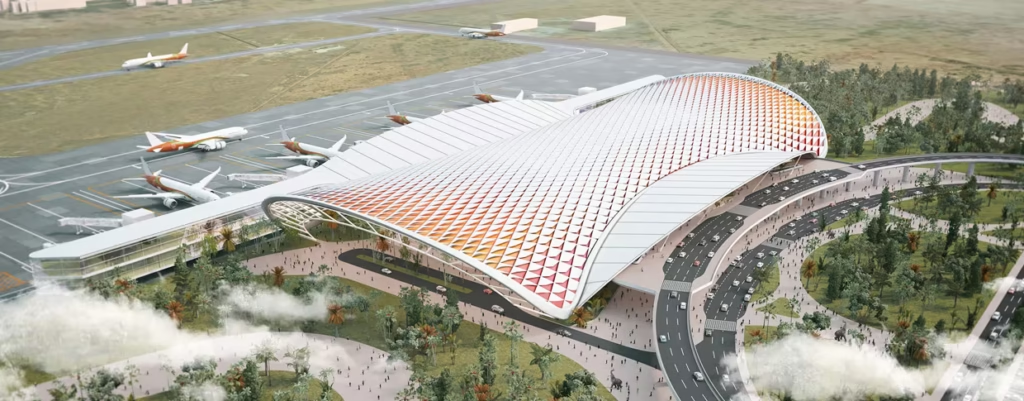
Home / Dholera SMART CITY PROJECTS There are moments in the history of a city when everything changes. For Dholera Special Investment Region, that moment is fast approaching — and it has a name: Dholera International Airport. Scheduled to become operational in 2026, the Dholera Greenfield International Airport is not just another piece of infrastructure. It is the single most transformative milestone in Dholera’s journey from a vision on paper to a functioning, globally connected smart city. And for real estate investors who have been watching this story unfold — or those who are only now paying attention — the implications for land prices are enormous. In this blog, we break down everything you need to know: where the airport stands today, what history tells us about airports and land appreciation, which zones in Dholera are set to benefit the most, and why the window to invest at pre-airport prices is closing faster than most people realize. View Airport-Zone Projects → What Is the Dholera International Airport? The Dholera Greenfield International Airport is being developed as a world-class aviation hub in Dholera SIR, Gujarat — approximately 80 kilometres south of Ahmedabad. It is a Central Government-backed project being executed under the Airports Authority of India (AAI) and is designed to serve both passenger and cargo traffic at an international level. Unlike Ahmedabad’s Sardar Vallabhbhai Patel International Airport, which is a retrofitted facility operating at near-maximum capacity, Dholera’s airport is being built from scratch — with modern runways, terminal infrastructure, and cargo handling facilities designed for the demands of a 21st-century smart city and industrial region. The airport is a critical component of the Delhi-Mumbai Industrial Corridor (DMIC) master plan and is expected to serve the massive manufacturing and logistics hubs being developed within Dholera SIR. It is also designed to eventually support direct international routes, connecting Dholera to global business destinations as the city’s industrial base grows. Current Status — Where Does It Stand in 2026? As of 2026, the Dholera International Airport project is in an advanced stage of development. Land acquisition for the airport zone has been completed, preliminary civil work is underway, and the project has received all major environmental and regulatory clearances. The Ahmedabad-Dholera Expressway — the 109-kilometre six-lane highway that provides the primary road connection to the airport site — is now fully operational, dramatically cutting travel time between Ahmedabad and Dholera to under 60 minutes. State and Central Government officials have consistently reaffirmed the 2026 operational timeline, and with the broader DMIC activation in Dholera gathering pace, the political and economic will to deliver this project on schedule has never been stronger. What History Tells Us: Airports and Land Prices To understand what Dholera’s airport means for land prices, it helps to look at what airports have done to real estate markets elsewhere in India and globally. Jewar Airport, Uttar Pradesh: Land prices in the areas surrounding the Noida International Airport (Jewar) — another greenfield airport under development — have risen by 200% to 400% in the zones closest to the airport boundary since the project was officially announced and construction began. Early investors who bought agricultural and residential land in 2019-2020 are today sitting on multiples they never imagined. Navi Mumbai International Airport: Property values in Panvel, Ulwe, and surrounding micro-markets have appreciated significantly since the Navi Mumbai airport gained serious momentum, with some sectors recording 3x appreciation over a five-year period. Hyderabad’s Rajiv Gandhi International Airport (RGIA): When the Hyderabad airport opened in 2008, the surrounding Shamshabad corridor — once considered distant and undeveloped — transformed into one of the city’s most active real estate corridors within a decade. Land that was available for a few lakhs per acre before the airport is now priced in crores. The pattern is consistent across every major airport development globally: land prices in the surrounding region begin rising during the construction phase, accelerate sharply as the opening date approaches, and then sustain elevated prices as commercial and residential demand permanently increases. Dholera is following the same trajectory — and the construction phase appreciation is already visible in current pricing trends. How the Airport Will Impact Dholera Land Prices Specifically The Dholera International Airport will impact land prices through several interconnected mechanisms: Direct Demand from Airport-Related Development Every international airport generates enormous demand for logistics parks, warehousing, cold storage, aviation fuel infrastructure, MRO (Maintenance, Repair & Overhaul) facilities, and hospitality. All of these require large land parcels in close proximity to the airport. As developers and corporations begin acquiring land for these facilities, demand — and pricing — in Dholera’s airport-adjacent zones will increase significantly. Industrial Activation and Job Creation The airport will enable Dholera’s industrial zones to attract global manufacturers who require reliable air connectivity for executive travel, just-in-time supply chain logistics, and high-value export shipments. As factories and industrial units become operational, thousands of workers, engineers, and executives will need residential accommodation — driving demand for housing plots and apartments in residential zones. Connectivity Premium Real estate markets globally price connectivity as a premium feature. Once Dholera has both expressway connectivity and air connectivity, plots within the SIR boundary will command a substantial connectivity premium that currently does not exist in pricing. This re-rating of Dholera as a connected city — rather than an isolated development — will be one of the most significant price drivers. Investor Confidence and Mainstream Attention Perhaps the most immediate impact of the airport opening will be psychological: it will signal to the mainstream real estate investment community that Dholera is real, operational, and ready. Today, many investors are still waiting for proof. The airport opening will be that proof — and with it will come a wave of new buyers who will push demand and prices higher almost overnight. Which Zones in Dholera Will Benefit the Most? Not all areas of Dholera SIR will appreciate equally. Based on proximity to the airport, expressway access, and current development activity, the following zones are expected to see the strongest