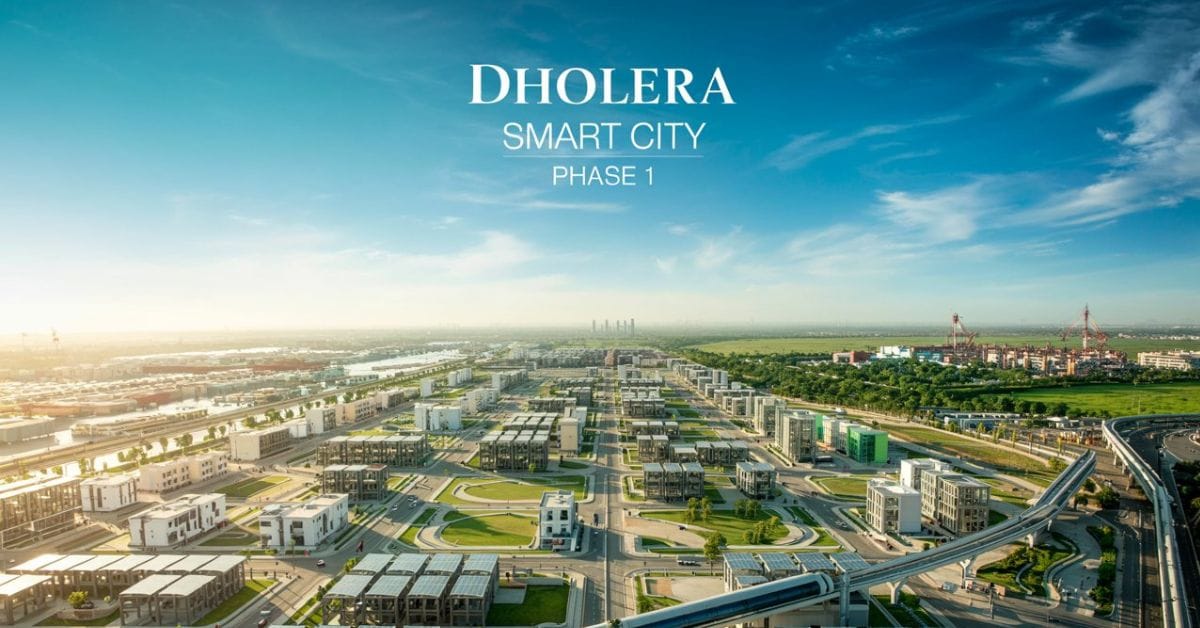
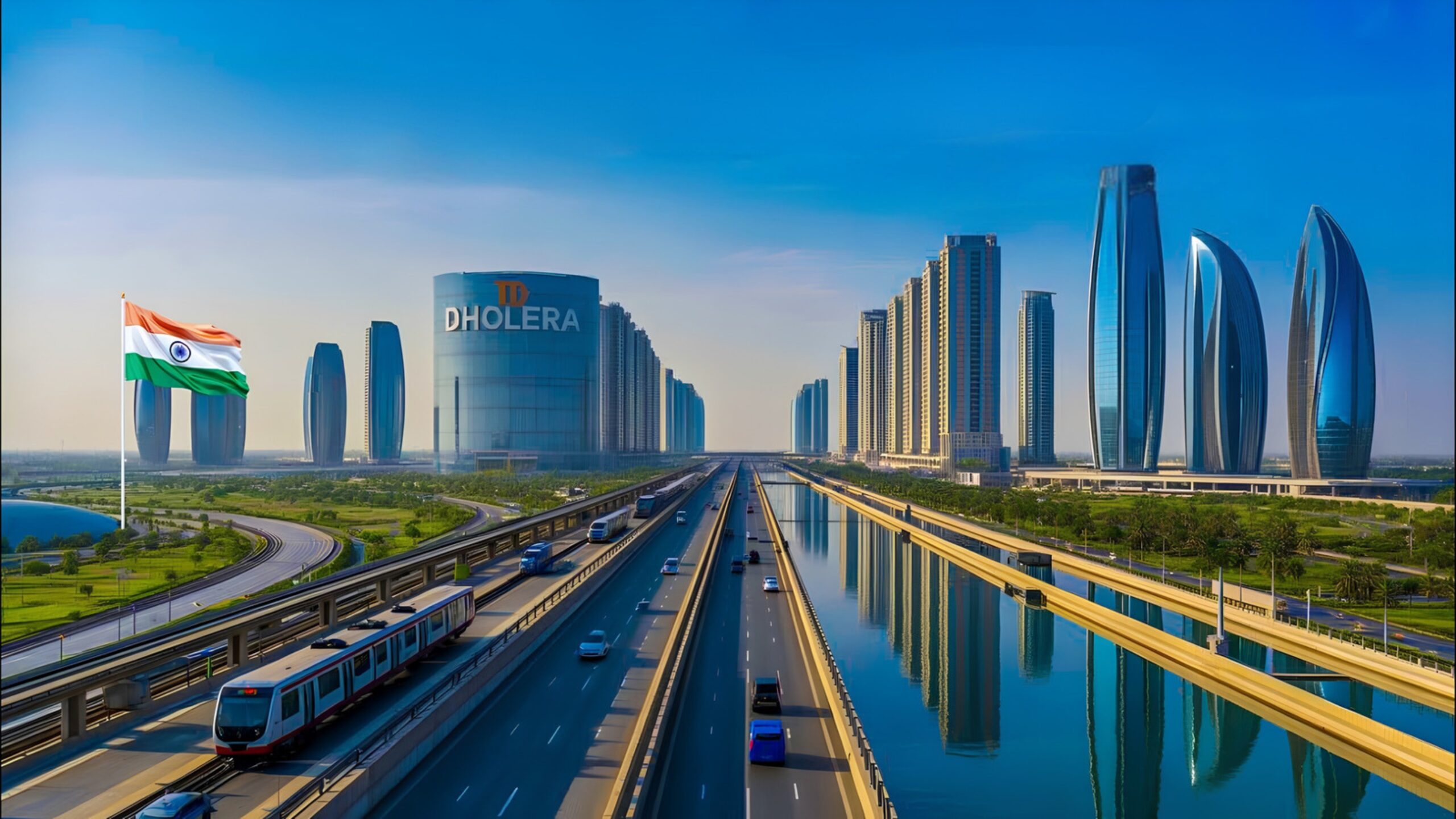
Why Dholera Smart City Investment in 2026 Is India's Most Compelling Land Opportunity
India has produced many real estate promises over the past two decades. Most have delivered ordinary returns at best, and painful lessons at worst. Dholera Smart City is different — not because of marketing language, but because of what is physically happening on the ground in 2026.
If you are seriously researching a Dholera Smart City investment this year, this guide will give you the honest, unfiltered picture — the opportunity, the timeline, the risks, and why patient investors who understand infrastructure-led growth are positioning themselves here right now.
What Makes Dholera Different From Every Other "Smart City" Project
The phrase “smart city” has been attached to dozens of Indian real estate projects over the past decade, most of which delivered neither smartness nor city. Dholera SIR is fundamentally different because it was not created by a private developer. It was notified by the Government of Gujarat as a Special Investment Region — a legal designation that places it under a dedicated authority (DSIRDA), a master plan approved at the national level, and a development framework tied directly to the Delhi-Mumbai Industrial Corridor.
The scale alone separates it from anything else in India. At 920 square kilometres, Dholera SIR is larger than the entire island of Singapore. The infrastructure being built — trunk roads, underground utilities, drainage systems, power corridors — was designed for a city of millions, not a township of thousands.
By 2026, this is no longer a paper plan. The Ahmedabad-Dholera Expressway is operational. The ABCD Building — the city’s administrative nerve centre — is functional. Trunk infrastructure in the activation zone is complete. Semiconductor plants worth over ₹91,000 crore are under construction. The Dholera International Airport is progressing toward Phase 1 operations.
This is the context in which a Dholera Smart City investment should be evaluated — not as a speculative land bet, but as an early entry into a city that is being built in real time.
Sector 1 — The Activation Zone Core (Sectors 1–6)
The most searched question from serious buyers right now is simply:
is Dholera a good investment?
The answer depends entirely on what kind of investor you are.
Yes — if you are a long-term investor. Dholera is not a market for quick flips or two-year exits. The appreciation cycle here is tied to infrastructure milestones — the airport opening, industrial plants becoming operational, residential demand from a growing workforce. Investors with a 5 to 10 year horizon who understand how greenfield cities create wealth are the ones who will benefit most.
No — if you need short-term liquidity. Dholera’s secondary market is still developing. If you need to sell within 18 months, this is the wrong market. The investment thesis here is patient capital.
Yes — if you prioritise legal safety. Unlike countless semi-approved projects across India’s periphery, Dholera SIR has government-notified zoning, DSIRDA oversight, and designated Town Planning schemes. Buying in an approved TP zone with clean documentation is fundamentally safer than buying in most other emerging markets.
Yes — especially for NRIs. With India’s semiconductor ambitions, DMIC infrastructure, and the Dholera International Airport bringing direct international connectivity to Gujarat, NRI buyers are finding Dholera compelling both as an investment and as a future home base.
Dholera Plot Price: Where It Stands Today and Where It Is Heading
Understanding Dholera plot price appreciation requires understanding how greenfield city economics work.
In any newly built city, land prices move through three distinct phases:
Phase 1 — Pre-Infrastructure (Speculative): Prices are lowest. Risk is highest. Returns can be extraordinary if the project delivers, but there is real execution risk. Early Dholera buyers from 2013 to 2018 were in this phase.
Phase 2 — Infrastructure Execution (Current): This is where Dholera sits in 2026. Roads are built. Utilities are underground. Industrial anchors are confirmed. Prices are rising, but the full demand wave — from industrial workers, businesses, and residents — has not arrived yet. This is historically the best risk-adjusted entry point in a greenfield city’s development cycle.
Phase 3 — City Maturation: Prices reflect actual demand, scarcity, and established city economics. The major appreciation gains are captured by those who entered in Phase 2.
Current plot prices in Dholera SIR vary significantly by zone and developer. Activation zone plots — where infrastructure is most complete — command the highest prices. Mid-city residential township plots offer more accessible pricing for first-time investors. Airport influence zone plots sit at a current discount relative to their long-term appreciation potential.
The key insight: plot prices in all zones are still affordable relative to where they will be when the city’s industrial base becomes fully operational and residential demand from tens of thousands of new workers begins to drive real scarcity.
Dholera SIR Land Investment: The 5 Infrastructure Drivers That Matter
When evaluating a Dholera SIR land investment, the specific infrastructure drivers that will create demand — and therefore appreciation — are what matter. Here is what is actually happening in 2026.
1. Semiconductor Manufacturing — The Demand Engine
The Tata Electronics semiconductor fabrication plant — worth over ₹91,000 crore — is under construction in Dholera. This single project will bring thousands of high-income professionals, engineers, and support workforce to the region. Where workers come, housing demand follows. Where housing demand comes, land appreciates.
Semiconductor plants of this scale do not relocate. They are multi-decade commitments that permanently anchor demand to a geography. For Dholera land investors, this is the single most important demand driver to understand.
2. Dholera International Airport
The Dholera International Airport — designed to be India’s second-largest — is progressing toward Phase 1 operations. Airports are historically the single most powerful driver of land appreciation in any market. Land within an airport influence zone that is bought before operations begin invariably outperforms over the long term.
Cargo operations, logistics companies, hospitality development, and commercial infrastructure around airports create layered demand that compounds over time. Plots in Dholera’s airport influence zone today are priced at pre-operational values. They will not stay that way.
3. Ahmedabad-Dholera Expressway
The expressway connecting Ahmedabad to Dholera — now fully operational — has reduced travel time between the two cities to under an hour. This connectivity transforms Dholera from an isolated greenfield site into an accessible extension of Gujarat’s most important urban economy.
Workers, businesses, and residents can now practically commute between Ahmedabad and Dholera. As the city develops, expressway-accessible plots will carry a sustained connectivity premium that reflects real daily utility.
4. Global Industrial Investments
Beyond semiconductors, Dholera is seeing major international commitments. Tillman Global’s proposed $10 billion data centre project signals that the city’s infrastructure — reliable power from the Dholera Solar Park, underground utilities, smart grid systems — is ready to support world-class technology investment. Each such commitment deepens the economic foundation that drives long-term real estate demand.
5. National Maritime Heritage Complex at Lothal
Just kilometres from Dholera SIR, the Lothal National Maritime Heritage Complex — one of India’s largest heritage tourism projects — is creating a unique secondary demand driver. Millions of annual visitors will generate hospitality, retail, and residential demand in Dholera’s southern zones that most investors have not yet priced into their calculations.
How to Buy Plot in Dholera SIR: What Serious Buyers Need to Know
The process of buying a plot in Dholera SIR is straightforward when approached correctly — but there are critical due diligence steps that separate safe investments from risky ones.
Step 1 — Verify the Zone. Only buy plots in designated Town Planning (TP) schemes. Agricultural land on Dholera’s periphery may be cheap, but it carries legal risk and may never receive development permission. TP zone plots have government-sanctioned land use.
Step 2 — Confirm DSIRDA Approval. All legitimate plotted developments within Dholera SIR require DSIRDA (Dholera Special Investment Region Development Authority) approval. This is non-negotiable.
Step 3 — Check the Developer’s Track Record. Work only with developers who have delivered projects in Dholera previously. Site visits, registry completion records, and buyer references matter.
Step 4 — Understand the Registration Process. Plot registration in Dholera follows Gujarat revenue and registration procedures. Ensure that the plot is registerable and that mutation can be completed without complications.
Step 5 — Evaluate Infrastructure Readiness. A plot in a gated township with completed internal roads, underground utilities, and boundary walls is fundamentally different from a raw plot in an unapproved layout. Infrastructure readiness determines when your investment becomes usable and sellable.
Dholera Land Investment Returns: What Investors Are Realistically Expecting
Return expectations for a Dholera SIR land investment should be built on realistic timelines, not promotional projections.
Investors who entered the activation zone in 2018-2020 have seen meaningful appreciation as infrastructure became visible and industrial commitments were confirmed. The appreciation in these zones reflects reduced uncertainty, not speculative hype.
For investors entering in 2026, the realistic return framework looks like this:
- 3 to 5 years: Moderate appreciation as infrastructure milestones are completed and industrial operations begin. Expect appreciation driven by demand from the workforce ecosystem that anchors plants bring.
- 5 to 8 years: Stronger appreciation as residential demand from industrial workers, professionals, and businesses creates genuine scarcity in well-located zones.
- 8 to 12 years: Mature city appreciation as Dholera’s population and economic base approach the scale envisioned in the master plan.
The investors who will be disappointed are those expecting a 2-year exit at 2x. The investors who will be very satisfied are those who understand that greenfield city wealth is created by patience, not speed.
The Bottom Line — Why 2026 Is Still the Right Time to Enter
The window for pre-infrastructure pricing in Dholera has closed. The window for pre-city pricing is still open — but it is closing.
The difference between buying in 2022 and buying in 2026 is that the risk profile is significantly better in 2026. Infrastructure is visible. Industrial anchors are confirmed. Airport timelines are more concrete. The thesis has moved from “if” to “when.”
The difference between buying in 2026 and buying in 2030 will be price. By 2030, the city’s industrial ecosystem will be operational, residential demand will be real, and prices will reflect what Dholera has become rather than what it is becoming.
A Dholera Smart City investment in 2026 is positioned at the exact intersection of reduced risk and remaining upside. That intersection does not stay open for long in any real estate market.
If you are evaluating whether to buy plot in Dholera SIR, the question is not whether Dholera will become a significant city. The infrastructure investment, industrial commitments, and government backing make that near-certain on a long enough timeline. The question is whether you will be invested when it does.
Explore our current projects inside and outside Dholera SIR — DSIRDA approved, RERA registered, and ready for site visits.